Wood Remodeling Design Award, sponsored by American Wood Council and Remodeling Magazine,
Pool Pavilion, Newton, Mass., 1986
Firms
Thomas McNulty Architects, 1957–74, founding partner
iPress, 1968–74, founding director with Thomas McNulty
Design Guild, 1974–91, co-founder
Professional Organizations
Registered architect, Mass., 1964
Boston Society of Architects, member, 1973
Architects for Social Responsibility, cofounder, 1973, with Sarah Harkness
Boston Architectural Center, faculty and board member, 1973–78
American Institute of Architects, member, 1983
Exhibitions
40 under 40: An Exhibition of Young Talent in Architecture, traveling exhibition organized by the Architectural League of New York, New York City, 1966
City by Night, 14 Triennale, Milan, 1968, with György Kepes and Thomas McNulty
Osaka World’s Fair, Osaka, Japan, 1970
Women in American Architecture, The Architectural League of New York, New York City, 1977
Four Boston Architects, The Boston Athenaeum, Boston, 1986
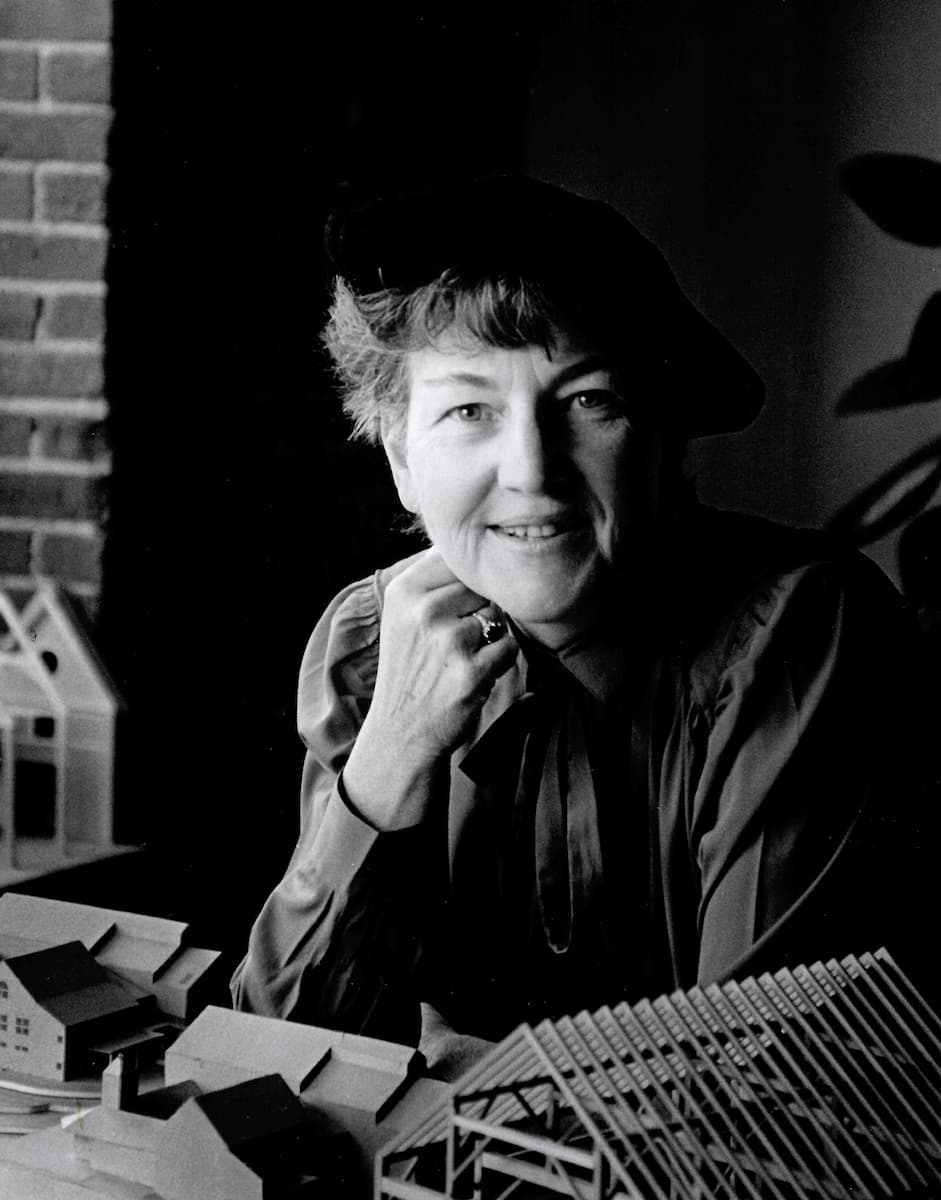
Mary Otis Stevens (1928– ) is best known for the experimental concrete house that she and Thomas McNulty created for their family in Lincoln, Massachusetts in the mid-1960s. Yet her long and varied career has encompassed a range of endeavors—as an artist, book publisher, educator, and advocate for sustainable design and social justice, as well as an architect.
Early Life and Education
Born in New York City in 1928 to William Dixon Stevens, a stockbroker and member of the New York Stock Exchange, and Gladys Pomeroy Jenkins, Mary Otis Stevens grew to reject the elitist values she encountered during her early upbringing on Long Island. In 1937, her parents separated, and Stevens moved with her mother and her younger sister Gladys to Old Chatham, New York. The open meadow farmland of the Hudson River Valley was ideal for fox hunting, an activity in which her mother and sister were active participants, but which Stevens rejected. Her mother would say, “she was a difficult child.”11Mary Otis Stevens, interview with the author, September 24, 2020. I am grateful to Mary Otis Stevens for her extensive cooperation with this web entry, to Mary McLeod for her thoughtful editing and production advice, to Elias Trout of the MIT Museum for providing access to the Mary Otis Stevens & Thomas McNulty Collection, to Rebecca Price of the University of Michigan Library for tracking down the source of the essay by Paola Nicolin, and to Inés Zalduendo of the Frances Loeb Library at the Graduate School of Design, Harvard University, for arranging access to various periodicals included in the bibliography. As the community had only a one-room elementary school, she and her sister were entrusted to the tutelage of a Hungarian governess who lacked academic credentials and even a command of English. Stevens found this period to be liberating; she was free to pursue her own interests, to order books and other educational materials “without interference from bothersome caretakers.”22Mary Otis Stevens to author, email, April 10, 2021.
Life in the rural countryside exposed Stevens to the realities that confronted local farmers during the Depression years, and her environmental consciousness was stirred by the destruction wrought on the farmers’ crops by the horses and hounds of the Old Chatham Hunt. Her interests in design date from her mother’s marriage in 1941 to Chester Alwyn Braman, Master of the Old Chatham Hunt. Stevens often worked on her stepfather’s farm projects, and she was fascinated by the modular construction of a corn crib that she helped to build.
Stevens credits her great aunt, godmother, and namesake Mary Otis Stevens with steering her through her turbulent upbringing. Aunty May, as Stevens called her, was “her life guide—her North Star.” Her aunt’s support “gave me the confidence that I could stay connected to a wider world.” Recounting the sporadic visits with her aunt at the family homestead in Long Island, Stevens elaborates:
Customarily these visits to her house of memories began with a tour. Very like a docent, Aunty May connected historical events in which family members had played a distinguished role with every object she stopped to identify. Since our forebears had immigrated to this continent on the early boats, many were involved in the Colonial settlement, the War of Independence, the formation of our Democracy, and all the way up to Abraham Lincoln’s rise to the presidency. But what Aunty May wanted to impart was not that they—or we now—were special people but typical Americans who, from a sense of civic responsibility, responded to the critical events of their time. That, of course, sparked my lifelong social activism.33Mary Otis Stevens to author, email, February 5, 2021.
During her undergraduate studies at Smith College, where she earned her bachelor of arts degree in 1949, Stevens began taking part in the civil rights movement. This was the beginning of her commitment to social justice and racial equity. Her early ambition was to be a playwright—“setting the stage for life,” as she explains. During a trip to Paris in the summer of 1948, she discovered her interest in architecture; before that, she recalls, Paris was “like another planet.”44Mary Otis Stevens, interview with the author, Cambridge, Mass., September 24, 2020.
Unable to change her major from philosophy to architecture when she returned to Smith for her senior year, Stevens focused on courses in art history and a broad spectrum of design disciplines.
Three years after marrying William Fawcett in 1950, Stevens enrolled in the architecture program at MIT, where she completed the four-year undergraduate curriculum in only three years by taking advantage of the Institute’s summer course offerings.55Stevens enrolled at MIT under her married name, Mary Stevens Fawcett. Her attraction to the liberal political climate of Cambridge, Massachusetts and the mentorship of family friend Buckminster Fuller were crucial factors in her decision to attend MIT. Fuller, a self-described “comprehensivist,” who has been classified variously as an architect, inventor, engineer, mathematician, cartographer, and philosopher, taught in the architecture program every spring when Stevens was a student there.66Buckminster Fuller, “The Prospect for Humanity,” Saturday Review, August 29, 1964, 43–44, 180, 183, here 183. Fuller taught intermittently at MIT between 1948 and 1956. She agreed with his rejection of architecture as an aesthetic commodity and admired the combination of technological innovation and global vision in his thinking. Nevertheless, her independent spirit prevailed when she took part in Fuller’s design course; as she noted with pride, “Every student in the studio did a Bucky thing except me.”77Mary Otis Stevens, interview with the author, September 24, 2020.
Motivated by her social convictions, Stevens’s originally proposed to design a maternity hospital, but the school’s thesis committee rejected this idea. Instead, Stevens took up the challenge of revitalizing the Boston waterfront with the design for a World Trade Center, a project that bridged the school’s two disciplines of architecture and urban planning. Unconstrained by the economic imperatives that the Boston City Planning Commission faced with its proposal, she conceived a vibrant hub of activity intended to regenerate the broader urban environment. Her passion for curvilinear forms, evident in the circular exhibition hall that was the nucleus of her design, would recur in her future practice.
Career
After graduating from MIT in 1956 and a brief apprenticeship with The Architects Collaborative—cut short by her decision to work for Adlai Stevenson’s presidential campaign—Stevens joined MIT lecturer Thomas McNulty (M. Arch. 1949) and several of his colleagues in an experimental practice. Divorced from Fawcett soon thereafter, Stevens married McNulty in 1958, and they founded Thomas McNulty Architects, a partnership that was initially grounded in residential designs but grew to take on projects of expanded scope and scale.
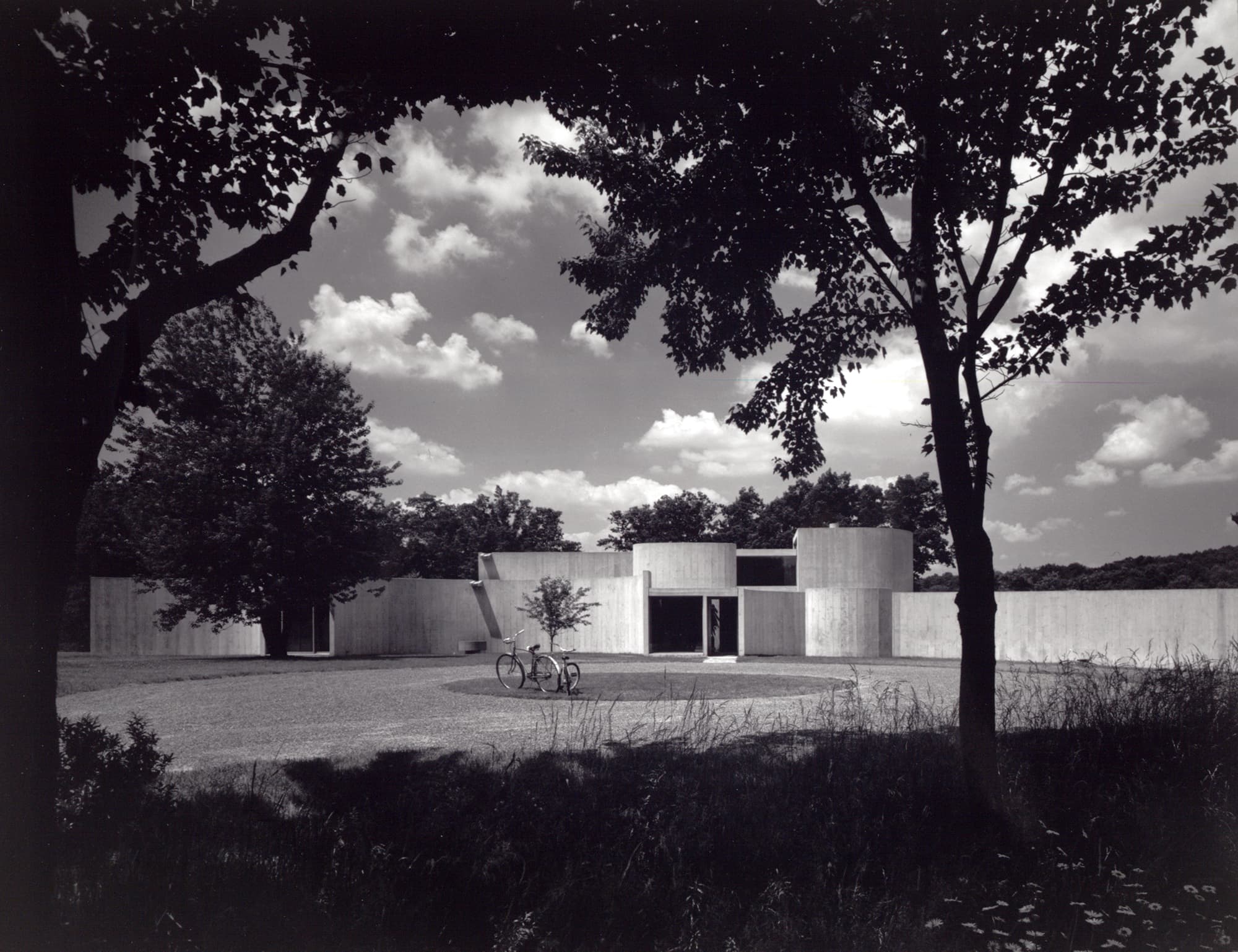
Mary Otis Stevens and Thomas McNulty, McNulty-Stevens house, Lincoln, Mass, 1965, exterior. Photograph by Julius Shulman. Gift of Ms. Mary Otis Stevens, courtesy MIT Museum
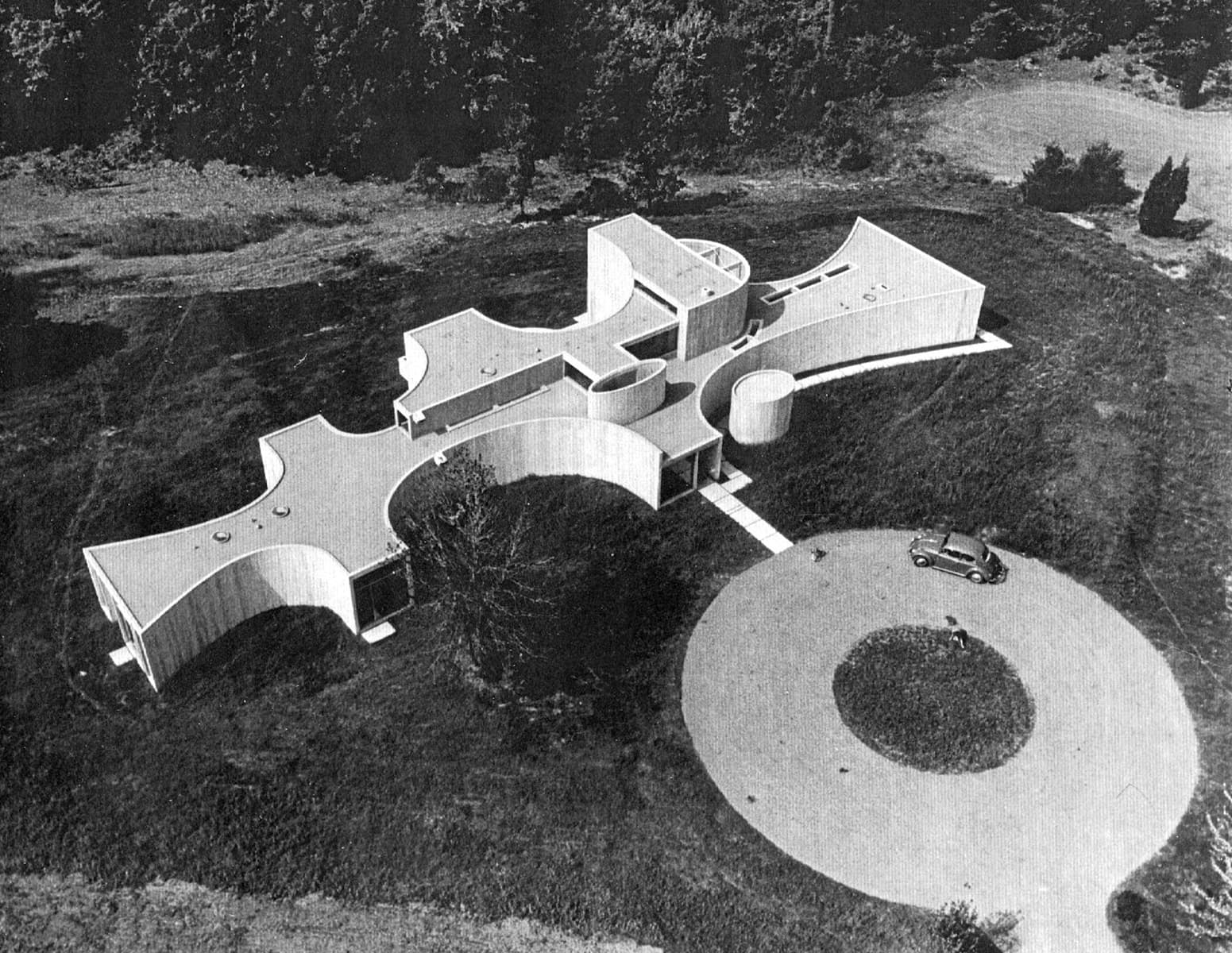
In 1961–62, Stevens and McNulty lived in Ravello, Italy. Stimulated by the region’s physical environment, they developed architectural and urban concepts that they hoped to use in a book as well as in practice. Upon their return to the United States, the innovative house that Walter Gropius built for himself in Lincoln, Massachusetts almost thirty years earlier inspired them to purchase a site overlooking Beaver Pond. Here they built a combined residence and studio for themselves and their three young sons (1962–65).88The Stevens-McNulty house was demolished in 2001, according to Liane Lefaivre. See Lefaivre, “Living Outside the Box: Mary Otis Stevens and Thomas McNulty’s Lincoln House.” Harvard Design Magazine 24, no. 4 (Spring/Summer 2006): 78. The first house in the region—and perhaps in the entire country—constructed entirely of exposed reinforced concrete, it featured curvilinear forms and an open layout. Most of all, it was an experiment in lifestyle; as Stevens elaborated in Life magazine: “Living is not a split-level, colonnaded, or carefully compartmented process—it is an ebb and flow of movement.”99“Home Without Rooms or Doors: A Sculpture for Living,” Life 59, no. 23 (December 3, 1965): 126. Rejecting contemporary ideas of domesticity, she subsequently maintained: “I wanted my three sons to be part of the flow of life, . . . to be able to leave the child world and enter the adult life when they wanted. . . . There was no such thing as the children’s quarters and adult’s quarters in the house. Everything was the same. There was democracy, there was complete equality.”1010Liane Lefaivre, “Critical Domesticity in the 1960s,” Thresholds 19 (1999): 23.
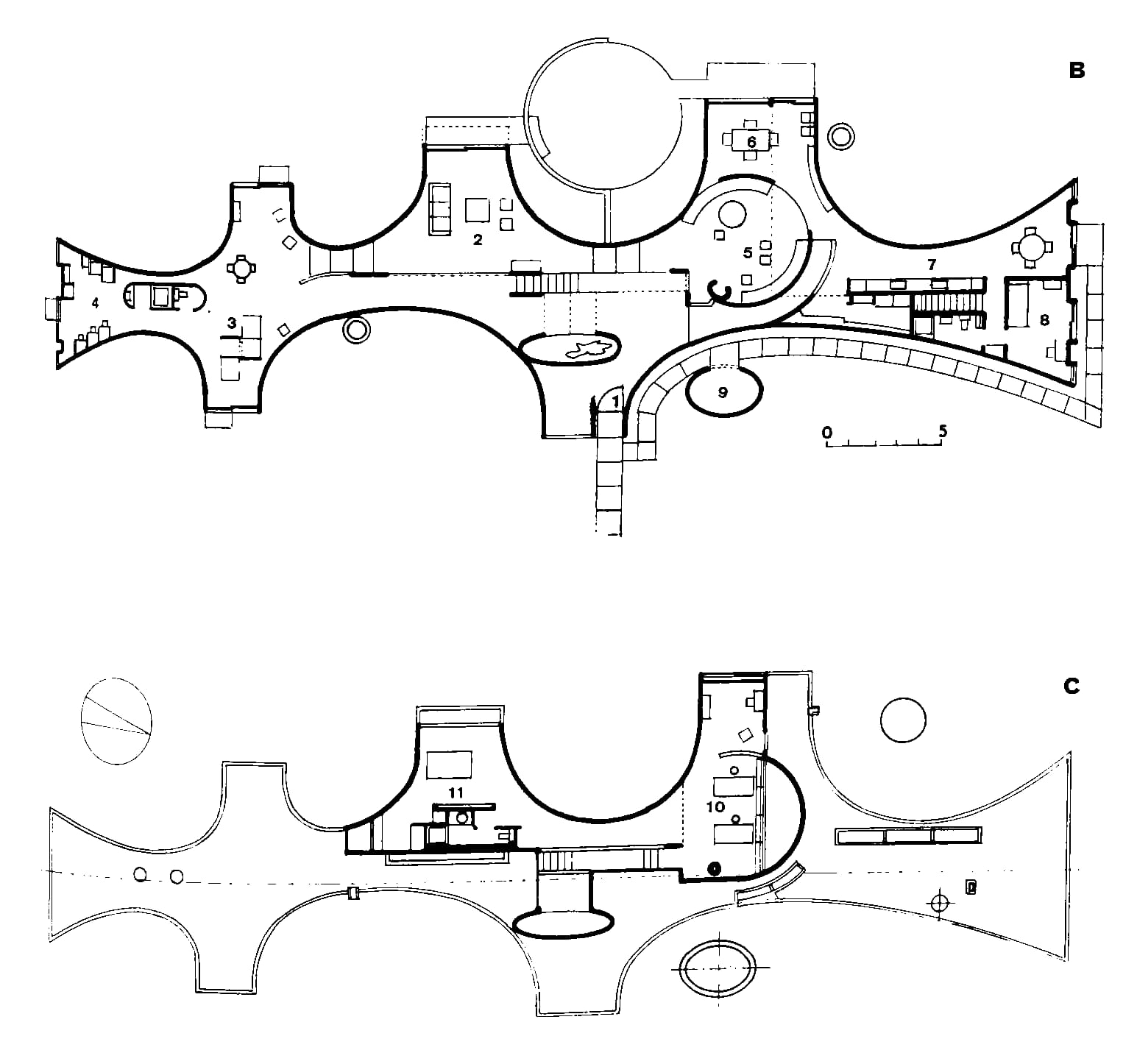
Mary Otis Stevens and Thomas McNulty, McNulty-Stevens house, plans. Deutsche Bauzeitung, November 1966, 919
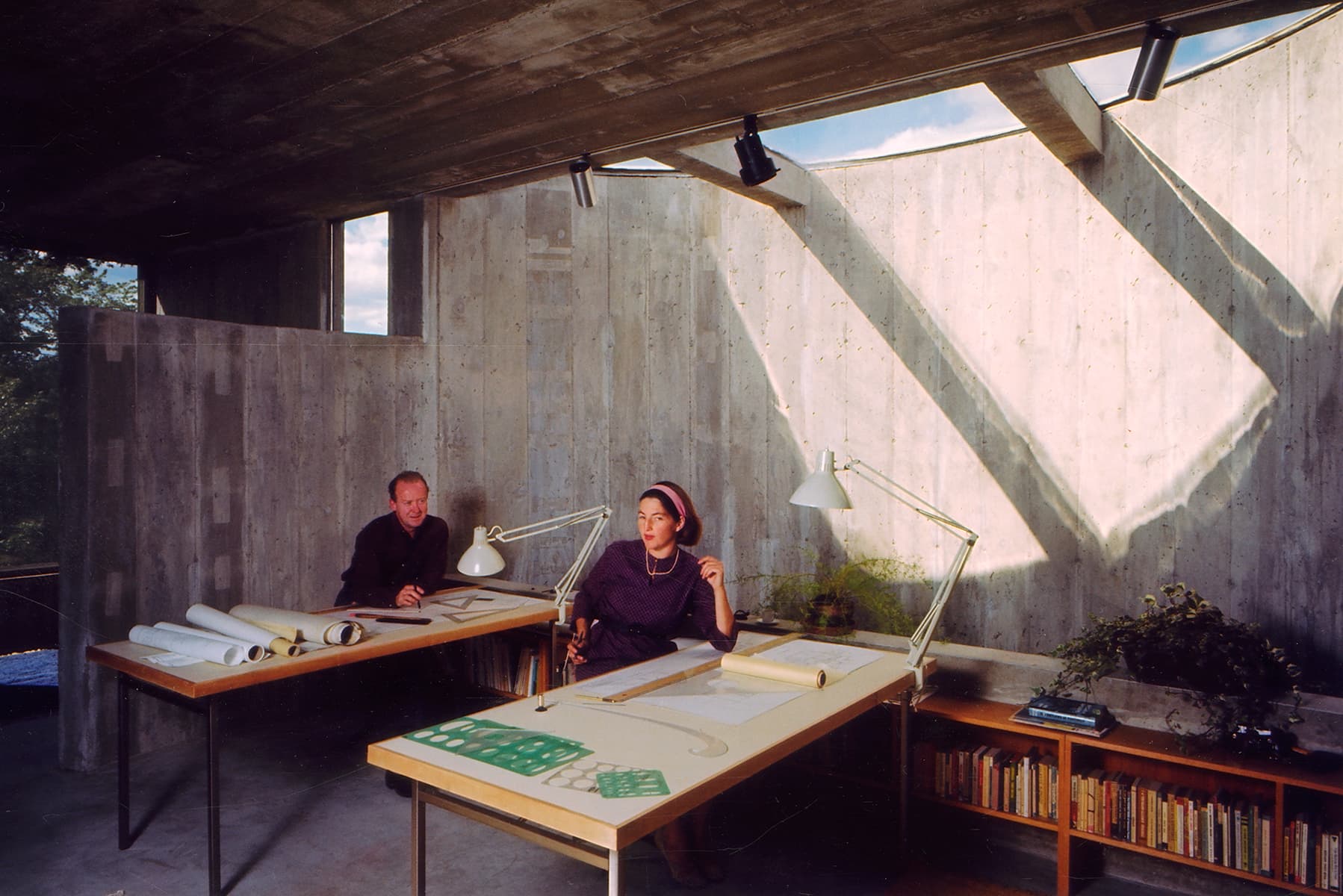
Just as their social ambitions for the house recall the communal family values to which Trüus Schröder-Schrader aspired in the design of her house in Utrecht (with Gerrit Rietveld, 1923), so too its layout allowed for a fluidity of use. Stevens and McNulty exploited the plastic potential of reinforced concrete in a pair of undulating facades, each one hundred fifty feet long and composed of curved segments that were punctuated by broad glazed openings with sliding glass doors. The concrete walls delimited the flow of circulation and the location of activities within the open interior, while the glazed doorways enabled easy access to the site. The only fixed functional areas were the kitchen and bathrooms, leaving the rest of the interior adaptable to changing family needs and relationships. Seeking to provide a nurturing environment for their young sons and to afford them a degree of independence, the architects designated a space for the boys at the southern end of the house, where sliding glass doors opened directly to a play area and the pastoral rural environs. They organized the social meeting spaces at the heart of the house around a two-story circular drum, capped by a skylight, and created a parents’ zone on the second level, which consisted of a sleeping area and a studio.
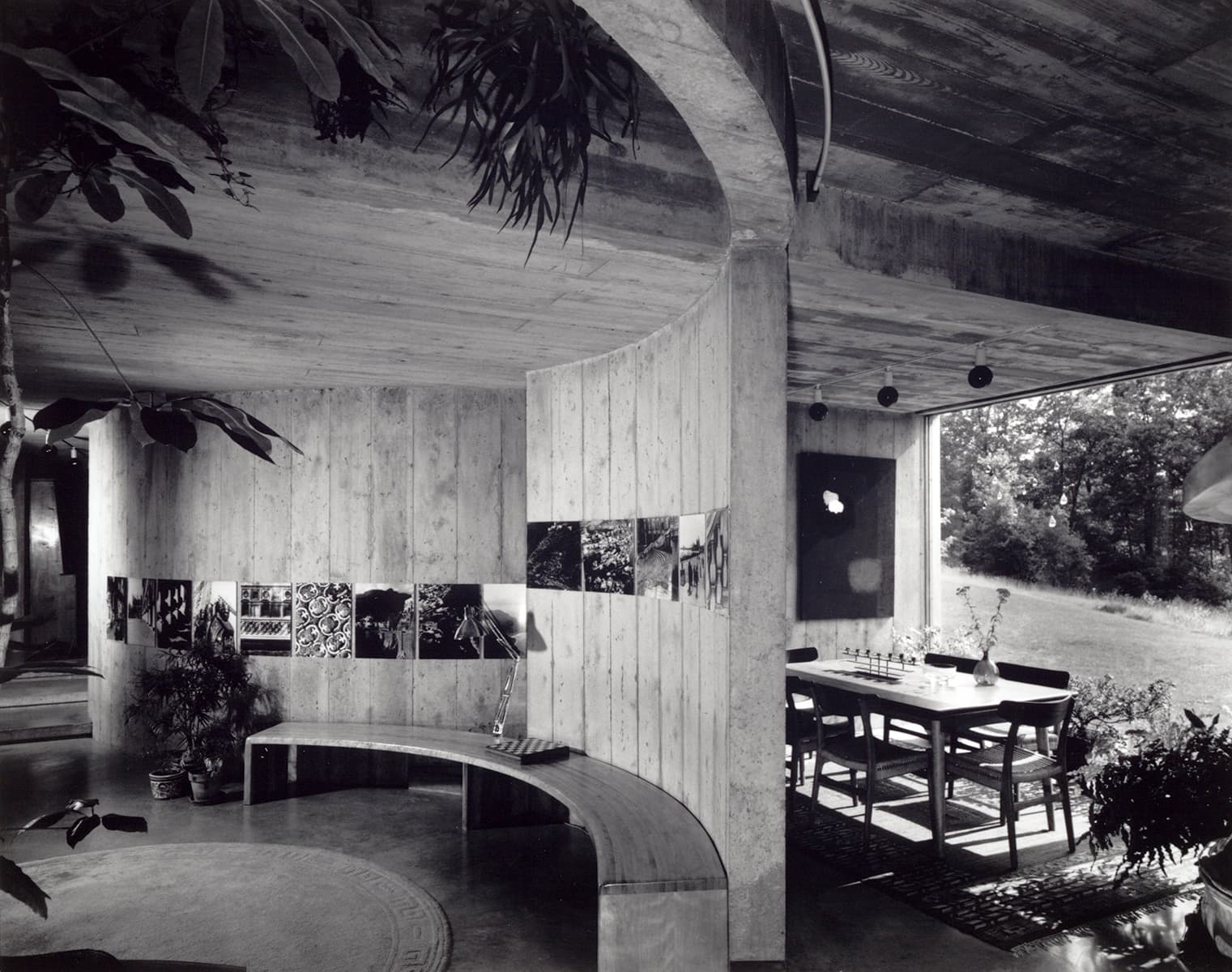
Mary Otis Stevens and Thomas McNulty, McNulty-Stevens house, ground floor meeting and dining areas. Photograph by Julius Shulman. Courtesy MIT Museum
Mary Otis Stevens and Thomas McNulty in their Lincoln house studio. Courtesy MIT Museum
To encourage family intimacy, Stevens and McNulty limited internal doors and partitions to bathrooms and a small guestroom on the lower level. Ramps and stairs throughout the house opened up multiple traffic paths—a phenomenon that Stevens likened to “a village street .” “We wanted to make the house into a kind of miniature city,” she recounted in an interview with Liane Lefaivre. “It was very urban. The idea was to bring people together, not isolate them in boxes on different floors. You had choices all the time.”1111Liane Lefaivre, “Living Outside the Box: Mary Otis Stevens and Thomas McNulty’s Lincoln House,” Harvard Design Magazine 24, no. 4 (Spring/Summer 2006): 77–78.
Mary Otis Stevens and Thomas McNulty, McNulty-Stevens house, interior. Photograph by Julius Shulman.
Gift of Ms. Mary Otis Stevens, courtesy MIT Museum
Stevens recalled that she and McNulty “thought about the Lincoln House as a rock formation or outcropping in a New England field. There was enough texture and change in the light bouncing off the concrete to animate it.”1212Mary Otis Stevens, interview with Michael Kubo and Mark Pasnik, “The Anti-Hero: Mary Otis Stevens,” Heroic: Concrete Architecture and the New Boston, ed. Mark Pasnik, Michael Kubo, and Chris Grimley (New York: Monacelli Press, 2015), 321, 324. Its precise north-south orientation let sunlight penetrate the children’s area in the morning during the summer solstice and then gradually extend along the ramp to achieve its maximum length at noon, only to retreat in the afternoon, so that the architecture operated like a solar clock. The fixed glass panels and sliding glass doors that terminated the curved concrete wall segments made the interior appear to extend infinitely into the landscape, while the abundance of doors maximized access to the clearing. The variegated coloration of the concrete and the rough, striated texture imparted by its formwork amplified the play of natural light admitted through these broad expanses of glass, as well as through the skylights and clerestories.
Mary Otis Stevens and Thomas McNulty, McNulty-Stevens house, aerial view. Deutsche Bauzeitung, November 1966, 918
Stevens and McNulty would create such effects more directly in “City by Night” (1968), a collaborative installation with MIT faculty member György Kepes at the XIV Milan Triennale curated by Giancarlo De Carlo, a member of Team Ten and frequent MIT faculty visitor. The Triennale theme, “Il Grande Numero” (The Great Number), emphasized the notion of the city as a social phenomenon—as opposed to a collection of architectural artefacts—and the tension between individual and collective action. To transform a narrow, one-hundred-foot passage into a visually dynamic volume, the trio lined the space with nighttime photographs that McNulty and Kepes took in Boston, and they projected moving lines of light at different temporal intervals along its length. Stevens suggested that the murals on the ceiling and the end walls be covered in mylar and that the installation incorporate an acoustic dimension through sounds recorded in the streets of Milan, further amplifying the corridor’s pulsating lighting effects.1313For “City by Night,” see “Milan 14 Triennale,” Domus 466, no. 9 (September 1968): 21; Paola Nicolin, “The Grammar of Vision,” in “Columns: On Exhibitions,” Kaleidoscope no. 9 (2010): 180–83. Stevens’s suggestions were implemented, but the mylar covering the end walls was removed prior to the opening. Few would experience the Triennale, however, as the Palazzo dell’Arte was occupied and vandalized by student protesters upon its opening in May 1968, and reopened only briefly following repairs.
In 1968, shortly after returning from Milan, Stevens and McNulty launched their publishing venture—the iPress series on the human environment, founded with the New York publisher George Braziller. Stevens served as director. In reaction to the prevailing architecture culture, Stevens and McNulty envisioned the book series as a means to examine alternative social and cultural practices that have implications for architecture and urban design. In summarizing her motivations, Stevens noted: “No more heroes, no more monuments.”1414“Notes on the Formation of iPress,” 9 November 1969 [typescript], Mary Otis Stevens & Thomas McNulty Collection, MIT Museum, Cambridge, Mass. For the first two books in the series, iPress was the general editor and George Braziller was the publisher; for the final three volumes, Braziller was the distributor and iPress assumed the role of publisher. The iPress series included: The Ideal Communist City by Alexei Gutnov et al. (1971, translation of 1968 Italian edition); Towards a Non-Oppressive Environment by Alexander Tzonis (1972); Playing Urban Games: The Systems Approach to Planning by Martin Küenzlen (1972); and From Tipi to Skyscraper: A History of Women in Architecture by Doris Cole (1973). Although financial pressures from the recession led Stevens to bring this venture to a close in 1974, several further volumes were also envisioned, including one by her fellow MIT student Charles Correa (M. Arch. 1955), Human Destiny: Studies of the Over-Populated Society.
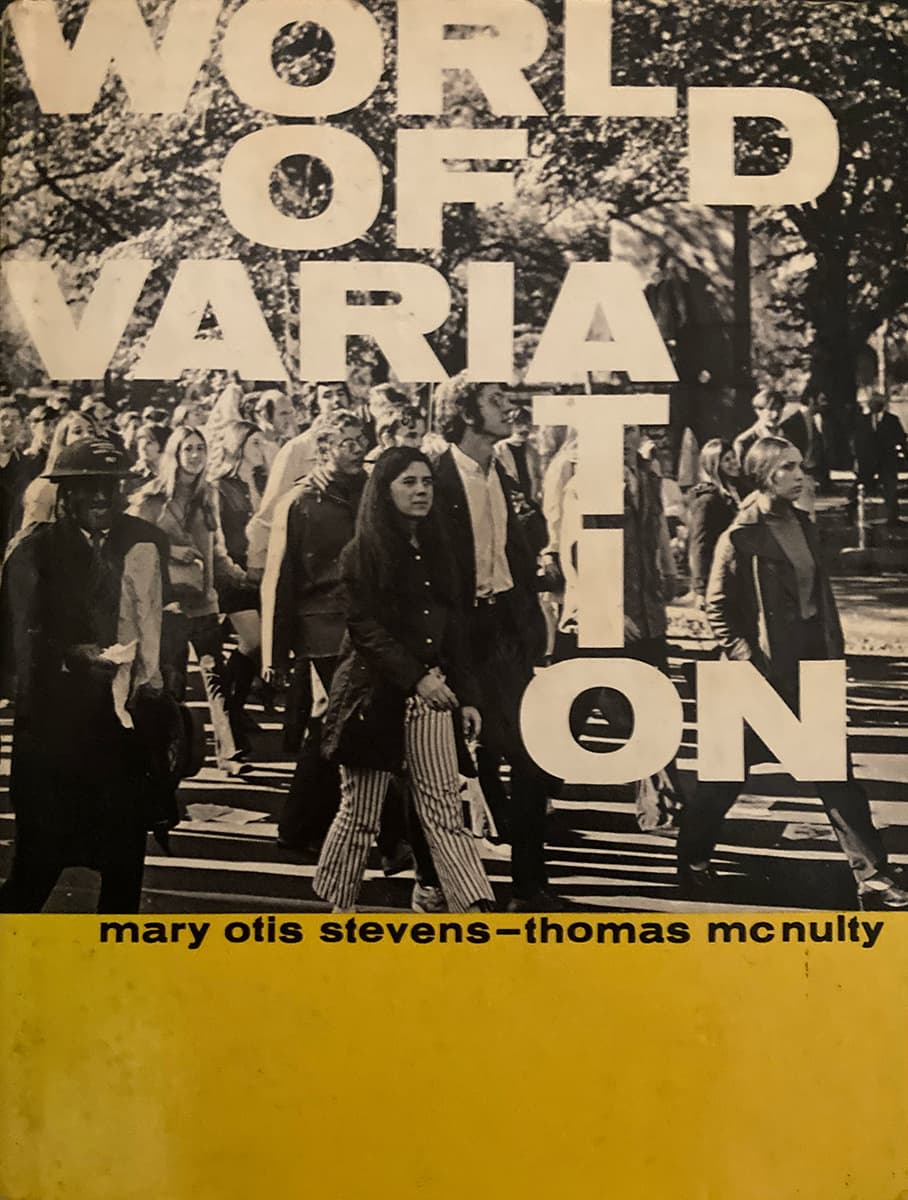
Mary Otis Stevens and Thomas McNulty, World of Variation, 1970
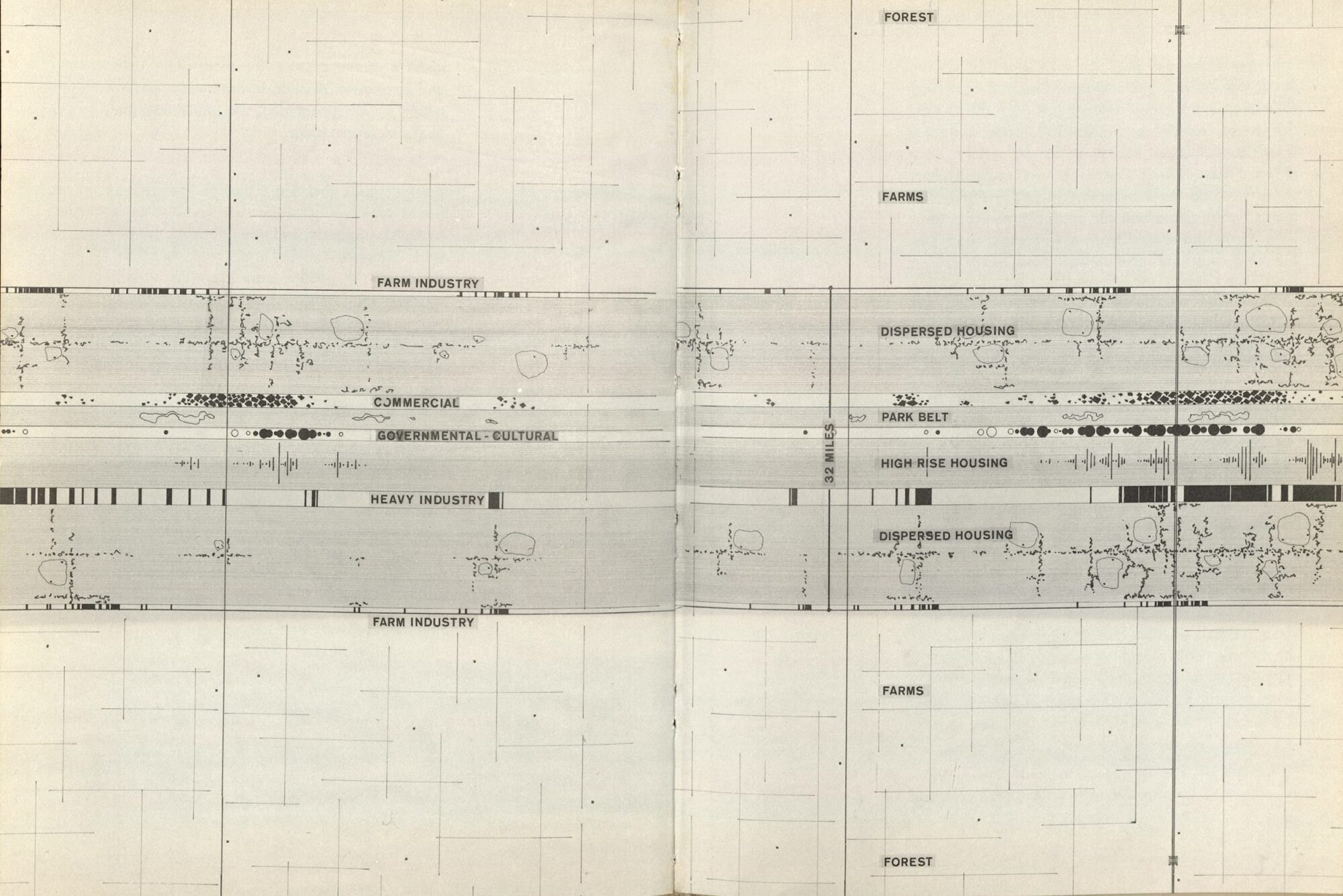
Mary Otis Stevens and Thomas McNulty, “linear society” diagram, World of Variation, 1970
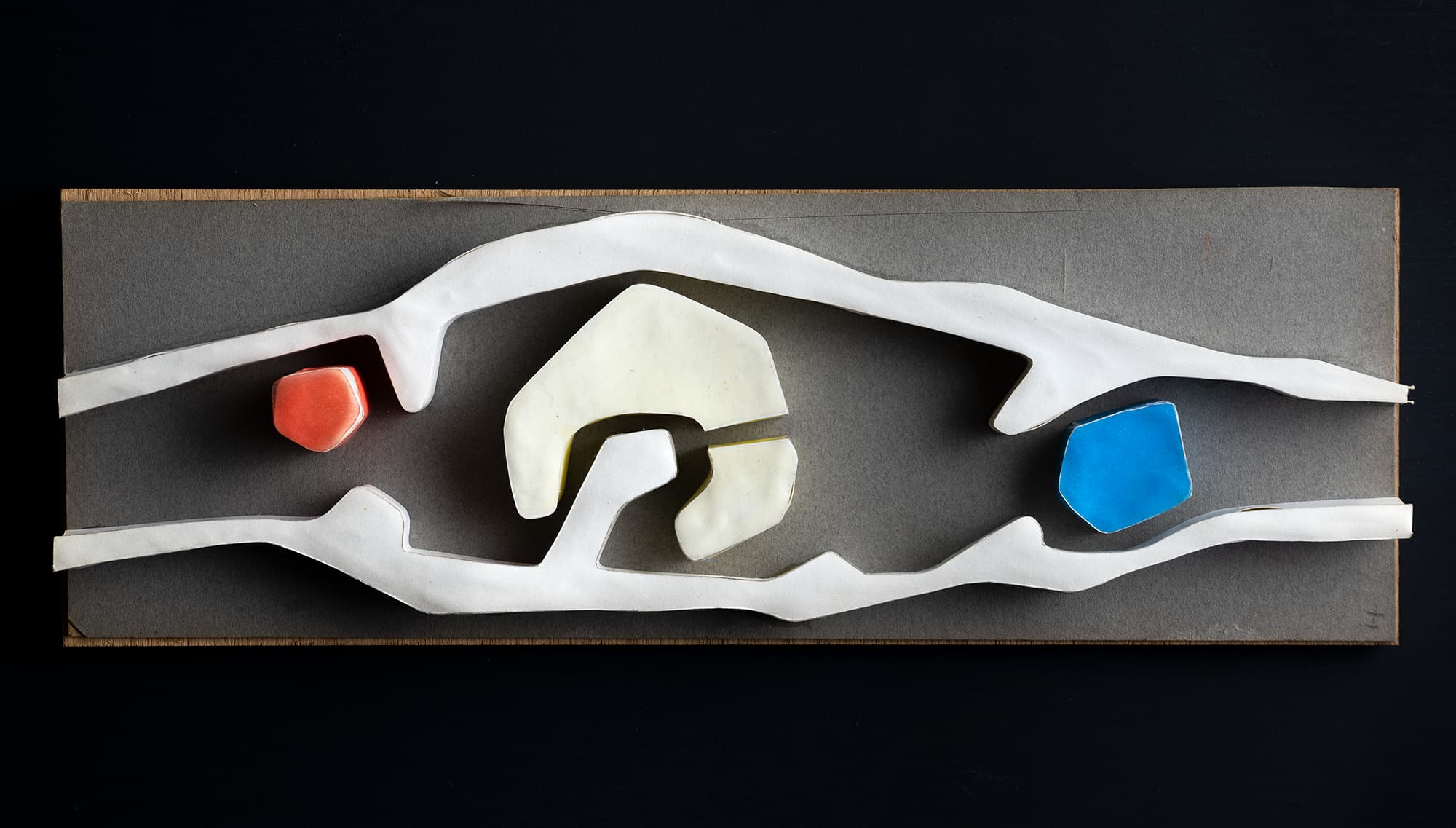
In their first book, World of Variation (1970 ), Stevens and McNulty returned to ideas they had probed in both graphic and written form since founding their practice. They saw the project not only as an experiment in social and material architectural terms but also as a forum for exploring ideas at a broader civic scale. This challenge had political implications, as they noted in the text: “[W]hy not abandon limits altogether in order to create environments which are porous both to the free pursuit of individuals and to strong collective movements?” In their schematic plan diagram for an equitable “linear society,” for example, parallel belts of governmental/cultural, commercial, and industrial development are interspersed with housing and bounded on either side by farmland and open landscapes. Equating the aesthetics of this form with its psychological effects, they maintained: “Decay, disorder, and conflict do not seem as predictable in environments of such visual clarity. One can imagine feeling an ease, a pleasure, from understanding the relationship between activities as one moves through the distinct, expressive environments evolving on the different growth lines.” The conceptual basis of their urban proposition—“an environment generated by a series of activity centers and the designed flow of people and communication between them”—echoes that in their house/studio.1515Mary Otis Stevens and Thomas McNulty, World of Variation (New York: George Braziller and Boston: iPress, 1970), 76, 87, 101; for linear society plan diagram, see 92–93, for free movement diagram see p. 75.
Mary Otis Stevens, model used to illustrate “free movement within a limited environment” in World of Variation, 1970. Photograph by Michael Cardinali. Gift of Ms. Mary Otis Stevens, courtesy MIT Museum
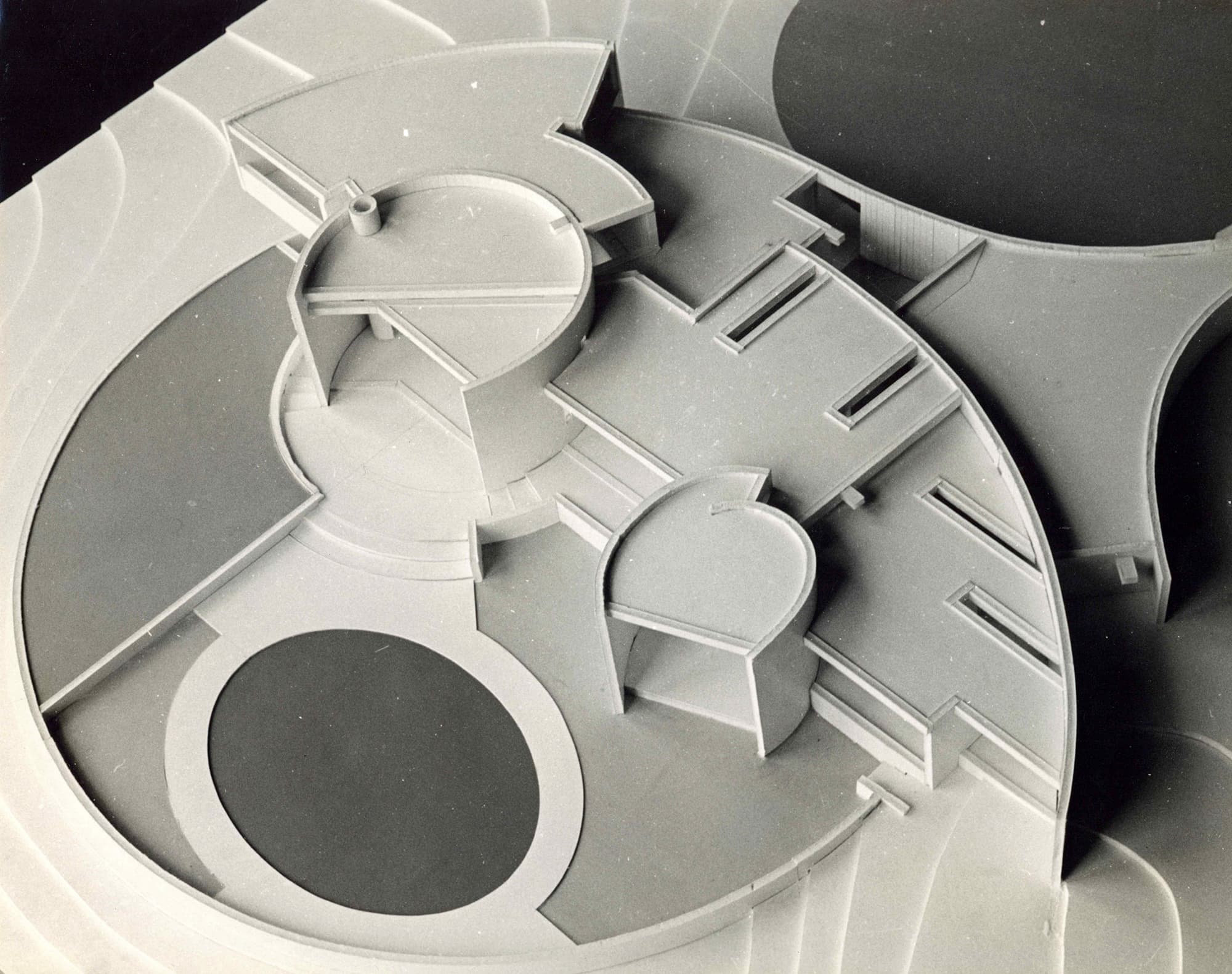
During the early 1970s, Stevens and McNulty continued to explore the plastic potential of reinforced concrete construction in three commissions for art collectors who shared their interest in formal experimentation. These commissions may have arisen from the broad local and international coverage that they received for the Lincoln house upon its completion in 1965, though the clients did not want the houses published. Stevens considered the opportunity to explore architectural concepts to be more important than publicity.
Mary Otis Stevens and Thomas McNulty, Torf House, model, circa 1970. Gift of Ms. Mary Otis Stevens, courtesy MIT Museum
As Stevens ultimately came to realize, the designers’ social idealism and their choice of site for the Lincoln house were in conflict. Their concept of bringing people together pertained to the internal workings of the house but did not extend to its relationship to its suburban context, from which it was isolated visually and physically, in accordance with the town’s two-acre zoning and setback requirements. Stevens deplored the cultural homogeneity that was occurring with the suburban flight from cities. As she subsequently noted:
American industrial cities were cramped and dirty while their satellite communities offered a way out—land was available and cheap. Most compelling, the suburbs promised no social or cultural unrest. Families didn’t have to worry about their neighbours, because thanks to careful marketing on the part of developers they were all alike. While the poor and most minorities remained in the cities—with the exception of wealthy elites clustered around cultural centres designed for them—the white middle classes fled to suburbia. This social and cultural divide was against everything the earlier more egalitarian American society had stood for: a melting pot.1616Pelin Tan and Ute Meta Bauer, “Mary Otis Stevens: The Flux of Human Life,” Domus 967, no. 3 (March 2017): 112.
Rather than contributing fully to an egalitarian American ideal, the couple found themselves enmeshed within the “social and cultural divide” fostered by suburban development. During the 1980s, as a member of the Boston Society of Architects Urban Design Committee, Stevens would challenge architects and planners to seek urban analogues of features associated with a conventional suburban lifestyle, querying: “What have architects, planners and BRA administrators done to substitute for the backyard, sidewalk, front porch, the neighborhood school or church?”1717Mary Otis Stevens, “Children Have Lost their ‘Turf’ in New Housing,” Boston Globe, October 19, 1985, 18.
In 1972, in an essay published in the French leftist journal Espaces et Sociétés, Stevens declared the city to be “an oppressive form of social and physical organization.” She deplored hierarchical power structures and a top-down approach to planning and advocated for the linear urban organization that she and McNulty had proposed in World of Variation. This approach, she believed, had the power to diminish the pollution and depletion of natural resources that she associated with capitalism. The vernacular Mediterranean and Aegean settlements that the couple experienced in Ravello led to her belief that such a communitarian society could not only evolve organically, without the imposition of order from above, but also “vary according to activities, resources, and political, social and economic structures of each particular community.”1818Mary Otis Stevens, “City is a four-letter word” [typescript], 1, 18, Mary Otis Stevens & Thomas McNulty Collection, MIT Museum, Cambridge, Mass.; published in French as Mary Otis Stevens, “City is a four-letter word,” Espaces et Sociétés 6, nos. 6–7 (July–August 1972): 149–63.
The architectural culture in the Boston region was a “collective enterprise” during the period when the Lincoln house was in development, according to Stevens. Looking back on that era with nostalgia, she laments that “the collegiality eventually shifted because architects lost control of their projects to developers serving corporate clients with the priority on profits and privatizing to the detriment of the users and the public domain.”1919Mary Otis Stevens to author, email, October 7, 2020. As she previously noted, “architecture became less of a communal effort . . . . But for a while during the postwar era, there was openness, collegiality—and so much became possible.”2020Mary Otis Stevens, interview with Kubo and Pasnik, 325.
From 1966 to 1969, Stevens and McNulty joined the “New City” project of the Harvard/MIT Joint Center for Urban Studies, under the directorship of Daniel Patrick Moynihan, which gave them the opportunity to explore the architectural ramifications of their social convictions. In this context, they developed proposals for Boston’s inner-city neighborhoods, for housing in the South End, and a study of Massachusetts prisons. This research culminated in their design for a pre-release center on the grounds of the Norfolk State Prison (1971). Noting “the paternal structure of authority” in prisons, Stevens concluded in a subsequent book review that “prisons expose the symptoms of society’s greater wrongs.”2121Mary Otis Stevens, review of The Human Cage: A Brief History of Prison Architecture by Norman Johnson and The New Red Barn: A Critical Look at New Prison Architecture by William C. Nagel, Architecture Plus 1, no. 10 (November 1973): 86.
A further occasion to explore regional vernacular traditions followed in 1974, when Stevens and McNulty spent a semester teaching in North Africa as part of an MIT program at the École des Beaux-Arts in Tunis, North Africa. In contrast to McNulty and Dean Lawrence Anderson, who devoted their lectures to prototypical American buildings, Stevens presented images from her growing collection of low-cost housing in the United States, particularly trailers and mobile home communities, which she compared to the gourbi—the traditional housing unit that had served North African desert communities for thousands of years. Further parallels between these examples by the Berber and Bedouin tribes and those created by the Native American and Eskimo populations of North America expanded her insights into resource conservation and human ecology on the two continents.2222See untitled typescript on scope and intention of iPress books, September 12, 1974, Mary Otis Stevens & Thomas McNulty Collection, MIT Museum, Cambridge, Mass.
Stevens used this same pedagogical technique at the Boston Architectural Center (BAC), which offered night-time courses for nontraditional students whose employment limited their educational options. Stevens began teaching there in 1973. She also served on the Board of Governors through the tumultuous period when the program was taken over by the Boston Society of Architects during the process of accreditation, which resulted in the BAC being accredited to grant a bachelor of architecture degree in 1979.
Upon her return from Tunisia, Stevens established Design Guild (1974–91) with several BAC students and likeminded colleagues. A multi-disciplinary, collaborative practice, Design Guild focused on the environmental consequences of building, including alternative technologies such as active and passive solar design.2323See Laura Van Tuyl, “Her Design is to Save the Earth,” Christian Science Monitor, January 26, 1991, 14. A pair of fellowships from the National Endowment for the Arts (1975–76 and 1977–78) enabled Stevens to do research on vernacular traditions in an American context. She admired the frugal use of resources such as wood, stone, and clay in early American settlements as well as the use of orientation in their buildings to absorb heat from the sun and admit cooling breezes, and she incorporated these ideas in her practice and teaching. Stevens adopted passive design principles such as south-facing windows, rain-water cisterns, non-toxic building materials, greenhouses, and shade trees, as well as technological means of resource conservation such as solar-heated water storage systems and heat exchangers in her designs. The design charette “Visions of Sustainability” that she and Sarah Harkness organized at Harvard’s Graduate School of Design in 1991 demonstrates this concern.2424See Architects for Social Responsibility, Visions of Sustainability: A Sourcebook for Environmentally Responsible Design (Boston: Architects for Social Responsibility, 1992). Thanks to Michael Kubo for drawing my attention to this event and to Mary Otis Stevens for sharing her recollections of the organization and the design charrette in an interview, September 24, 2020. The event grew out of Stevens’s membership (from 1973) in the Boston Society of Architects (BSA), where she and Harkness cofounded the group “Architects for Social Responsibility” to advocate for environmental concerns and issues of social equity—an impetus that the BSA ultimately abandoned, but that continued to resonate throughout Stevens’s career.
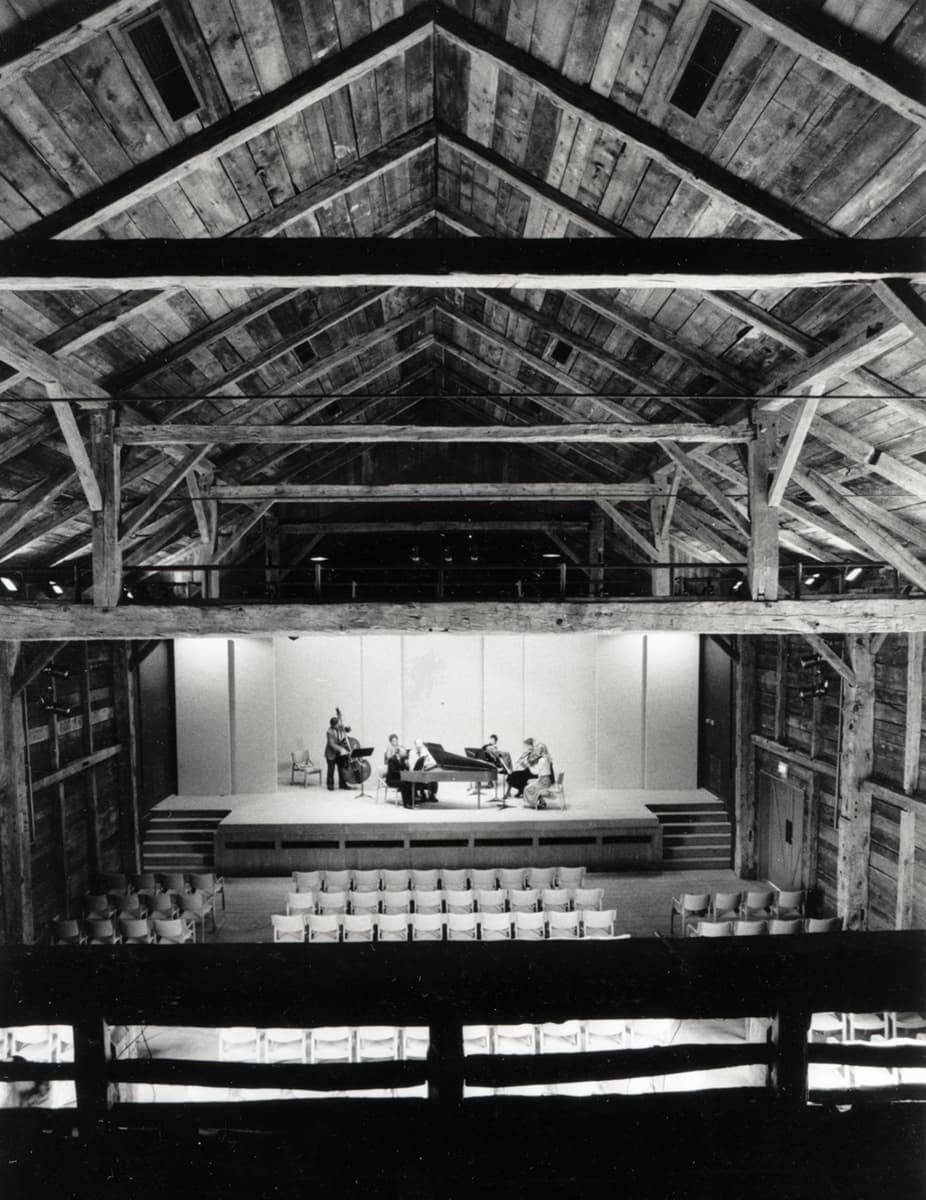
Mary Otis Stevens, The Barns at Wolf Trap Performing Arts Center, Vienna, Va., interior, circa 1984. Gift of Ms. Mary Otis Stevens, courtesy MIT Museum
Stevens’s interest in sustainable building materials and practices associated with vernacular construction led to a Design Guild commission to repurpose two eighteenth-century barns for the Wolf Trap Center for the Performing Arts in Vienna, Virginia (1979–84). Wolf Trap founder Catherine Filene Shouse contacted Stevens, seeking to expand the performance venues on the site with a year-round multi-purpose hall. Stevens engaged master craftsman and barn builder Richard Babcock to find two historic barns in upstate New York and arrange for their dismantling and transfer to the Virginia site. Meeting up with Babcock near the area where she had spent her youth, Stevens scoured the territory traversed by seventeenth- and eighteenth-century pioneers as they moved westward from the Hudson River Valley, just as she explored during her NEA research.
The commission resulted in the reconstruction of a German barn (c. 1690) to create a theater and a Scottish barn (c. 1791) to serve as a reception area and provide additional support facilities for the theater. With their facades reversed to showcase the weathering on the former exterior, the historic forms were refined to amplify their acoustic properties, utilizing old timbers that Babcock had collected at his workshop in Hancock, Massachusetts. A local television studio filmed the reconstruction, in which the traditional gin pole-and-pulley and block-and-tackle methods were used to hoist the components into place. Local school children came in on buses to observe the process—“a drama within a drama,” as Stevens recalls.2525Mary Otis Stevens to the author, email, December 7, 2020.
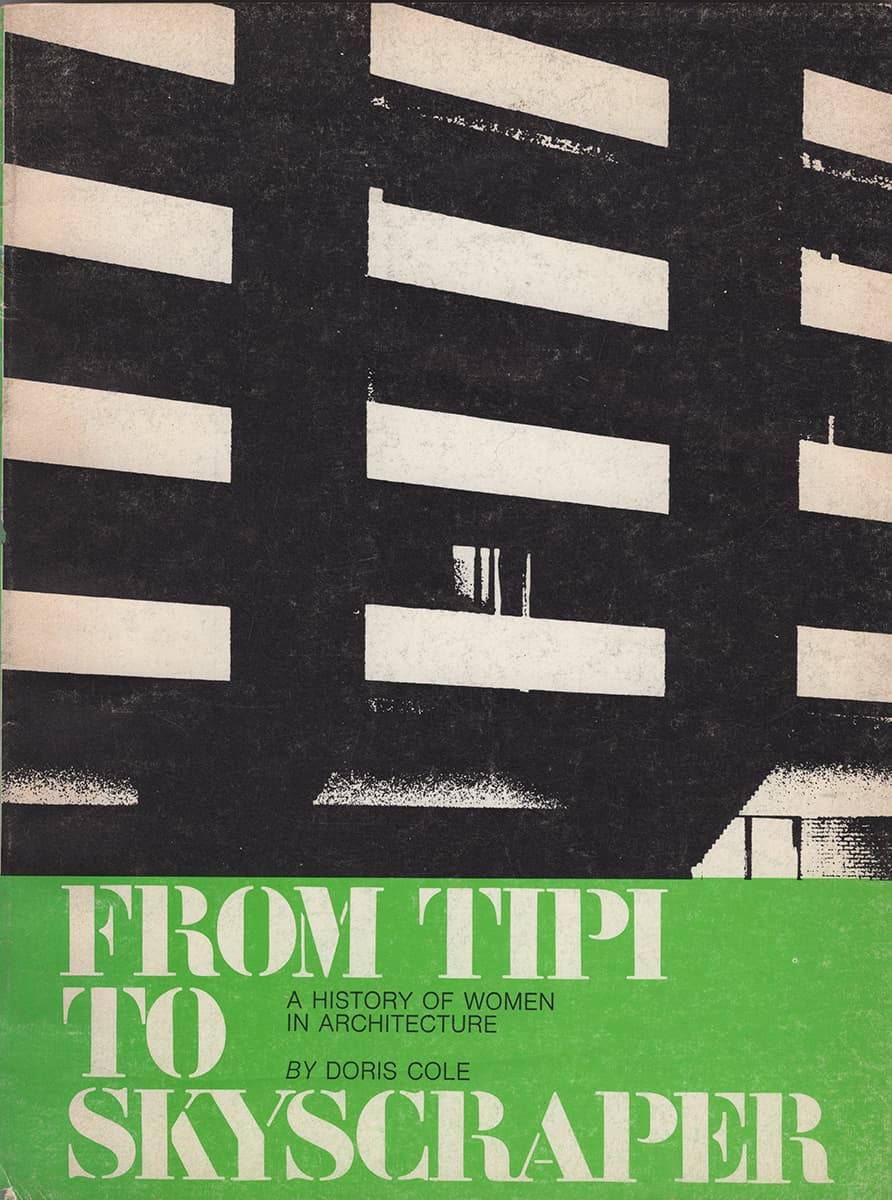
After selling their Lincoln house in 1978, Stevens and McNulty divorced. She subsequently married lawyer Jesse Fillman, and the couple moved to Cambridge—the city that throughout Stevens’s life served as the center of her social and political activism. Following her husband’s death in 1991, Stevens disbanded Design Guild to pursue studies in music composition at the Longy School of Music in Cambridge. She continued to actively support women in the field, citing the roles that her namesake Mary Otis Stevens and family friend Buckminster Fuller had played in her own career pursuits. In her contribution to Susana Torre’s exhibition catalogue, Women in American Architecture: A Historic and Contemporary Perspective (1977), for example, Stevens expanded upon the general history of women architects that Doris Cole had initiated in the final iPress volume, From Tipi to Skyscraper: A History of Women in Architecture (1973).2626This was the first of Doris Cole’s books devoted to women in architecture, including Eleanor Raymond, Architect (Philadelphia: Art Alliance Press, 1981); The Lady Architects: Lois Lilley Howe, Eleanor Manning, and Mary Almy (New York: Midmarch Press, 1990) and Candid Reflections: Letters from Women in Architecture 1972 and 1994 (New York: Midmarch Press, 2007).
Doris Cole, From Tipi to Skyscraper: A History of Women in Architecture, 1973
Cole traced her history to the anonymous Native American women who developed the easily transportable form of the tipi, and she celebrated the successes of graduates of the Cambridge School of Architecture and Landscape Architecture for Women (1915–42). She concluded her book by expounding upon the social and cultural obstacles endured by women in the field. Stevens, in contrast, adopted a more optimistic tone. In her essay “Struggle for Place: Women in Architecture: 1920–1960,” she described the numerous organizations that women had established to provide collective support for their professional endeavors and drew attention to architects including Natalie de Blois, Elizabeth Coit, Jean Bodman Fletcher, and Sarah Harkness (whose profiles are included in this website).
Notes written in 1962 encapsulate Stevens’s personal and professional aspirations: “I have found that freedom is the most demanding state for a person to elect.” Pointing to the difficulty of adopting such a position, she elaborated: “Feeling, reacting, reasoning, and intuiting—open to all the senses, capable of entertaining all ideas, but prevented by nature from finding lasting fulfillment in any—the free person is self-driven, a wanderer, looking always for counterparts in other minds of the dream or image carried within.”2727Mary Otis Stevens, “A Concept of Freedom,” June 30, 1962, Mary Otis Stevens & Thomas McNulty Collection, MIT Museum, Cambridge, Mass., 1, 2.